
Healthier Gingerbread Cookies
Classic gingerbread cookies, made more healthy! These gingerbread cookies are easy to make with whole wheat flour, molasses and coconut oil.

Updated by Kathryne Taylor on December 9, 2025

These gingerbread cookies will make your home smell like Christmas! I made a few simple substitutions to turn classic gingerbread cookies into healthier gingerbread cookies, without sacrificing flavor. They’ve been one of my favorite Christmas cookies since I developed this recipe ten years ago.
This cookie recipe is fun to make, especially with good company. Last weekend, my four-year-old daughter and I turned this dough into homemade gingerbread houses with this cookie cutter set (affiliate link), and we’ll soon make more batches of gingerbread cookies to share with friends.
I’m excited to introduce you to this recipe, too. The dough is remarkably easy to make (no mixer required) and manage (it might as well be Play-Doh!), with no chilling necessary. Turn on your favorite Christmas music and let’s start baking.
How to Make Healthier Gingerbread Cookies
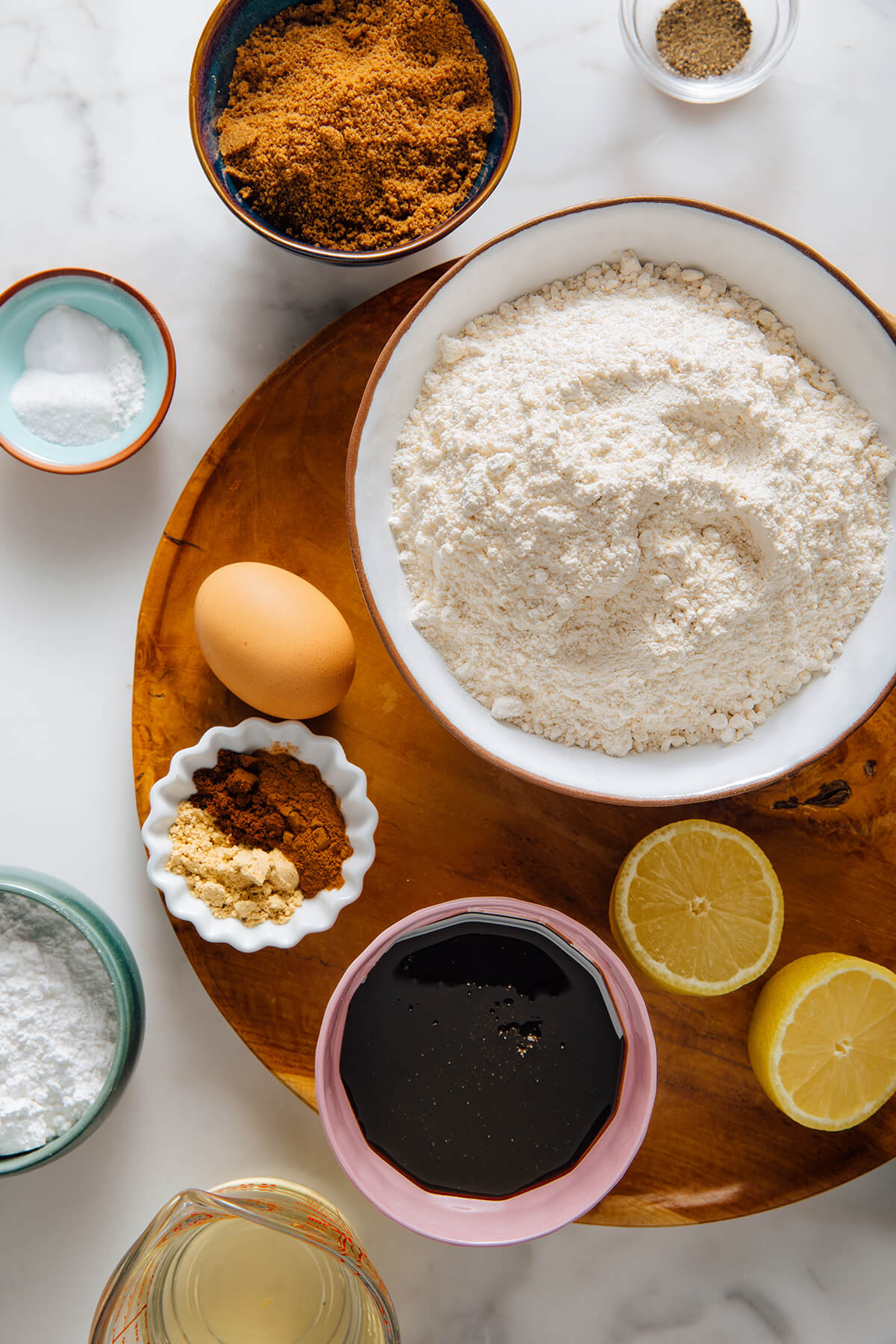
My substitutions include swapping coconut oil for butter, coconut sugar for brown sugar, and whole wheat pastry flour for all-purpose. All of those ingredients have become more mainstream over the past decade as their health benefits have become more apparent.
Whole wheat pastry flour is one of my favorite subtle nutrition upgrades. It’s made with soft white wheat berries instead of the usual hard red, yielding a lighter taste and marvelously tender whole-grain goodies. Especially given the bold flavor of molasses, no one will know these cookies are made with whole wheat.
This recipe does not work with regular whole wheat flour, but you can use all-purpose flour if that’s what you have on hand.
Watch How to Make This Recipe
Molasses & Spice Notes
You can control the level of spice and flavor intensity by carefully choosing your molasses. I tried a lighter molasses and blackstrap molasses. The light molasses produces cookies with lighter color and flavor, naturally. If you’re making these cookies for kids with sensitive palates, you might want to choose light molasses and maybe even use half of the spices specified below.
If you want intensely flavored cookies with an almost dark chocolate-level of richness, use blackstrap molasses and the full amount of spices. Blackstrap molasses offers greater nutritional value, as its flavors and minerals are more concentrated. Who would have guessed that molasses, which is a by-product in sugar production, could be so high in potassium, iron, Vitamin B6, calcium and magnesium?
How to Decorate Your Cookies
These cookies are not overtly sweet, and they look more festive when decorated. Options include:
- Drizzle them with the lemony icing recipe offered below, which requires some powdered sugar (here’s how to make your own with less refined sugar). It dries to a semi-solid state that’s still somewhat delicate, so the cookies don’t stack well.
- Use traditional royal icing, which calls for raw egg yolks and completely hardens on the cookie.
- Sprinkle them with powdered sugar, which looks like snow.
- Melt chocolate chips and drizzle the chocolate on top. You might need to briefly chill the cookies to harden the chocolate.
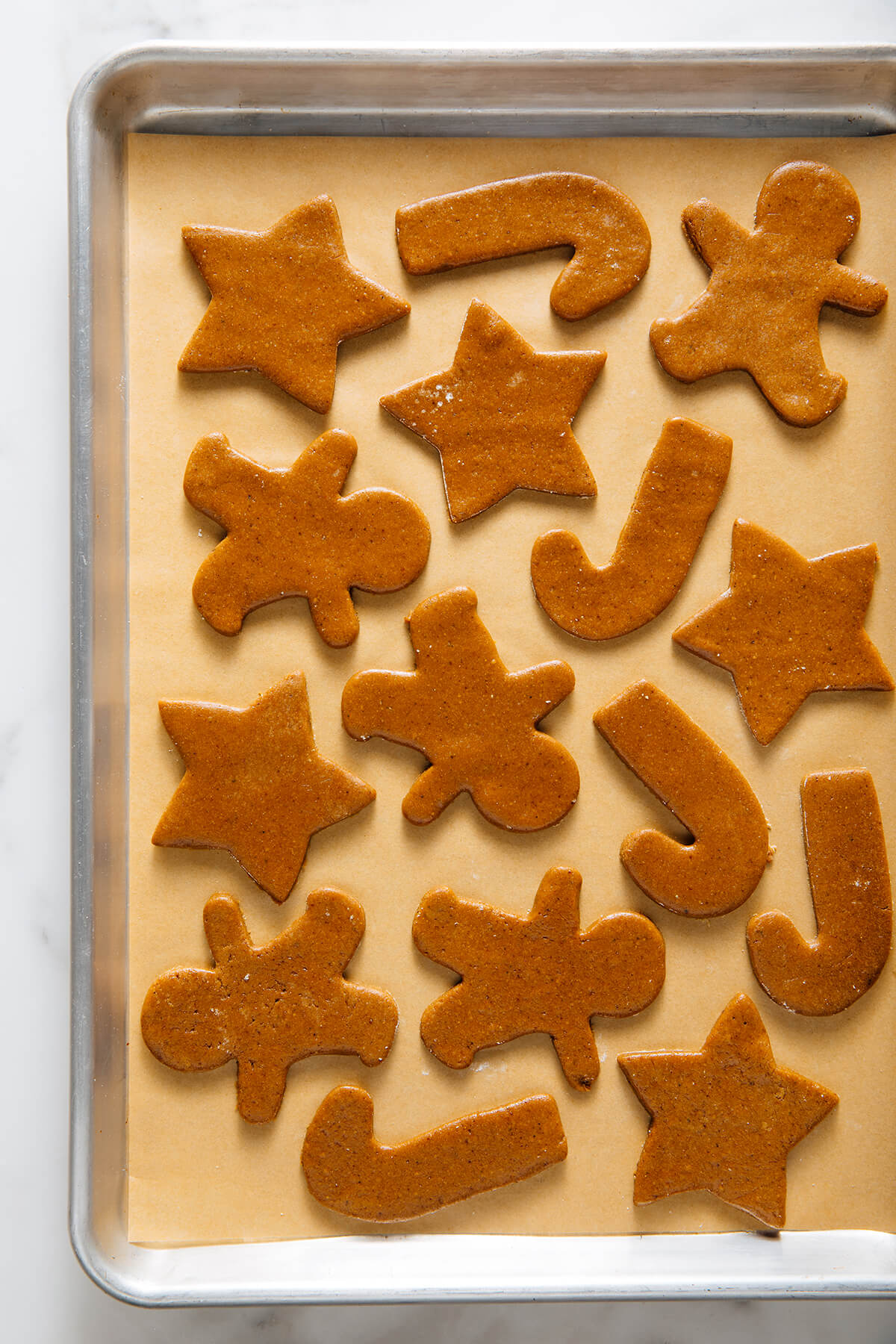
- Or sprinkle the cookie dough shapes with sparkling turbinado (raw) sugar before baking for a subtle sparkle and a crackly bite.


More Holiday Treats to Make
If you enjoy this recipe, here’s a selection of fun Christmas recipes on Cookie and Kate.
Gingerbread-flavored
Christmas cookies
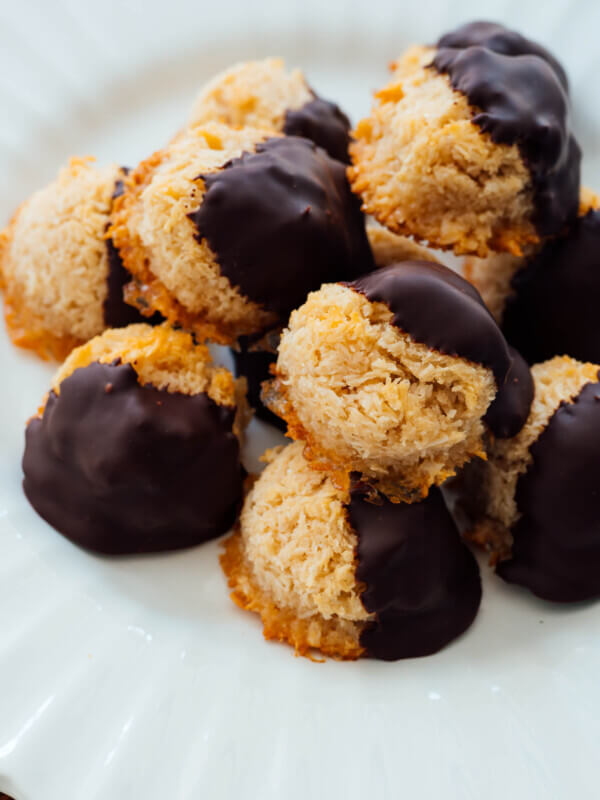
- Coconut Macaroons
- Lemon, Rosemary and Olive Oil Shortbread
- Monster Cookies
- Spiced Oatmeal Cookies
- Thumbprint Cookies
Please let me know how your gingerbread cookies turn out in the comments! I love hearing from you.

Healthier Gingerbread Cookies
Here’s a healthy version of your favorite classic gingerbread cookies! This gingerbread cookie recipe is healthier because of a few simple substitutions—I substituted whole wheat pastry flour for all purpose flour, coconut oil for butter and coconut sugar for brown sugar. See notes provided in the paragraphs above for tips and suggestions on choosing your molasses and decorations. Recipe yields around 32 cookies, depending on their size.
Ingredients
Cookies
- 3 cups (345 grams) whole wheat pastry flour*, spooned and leveled, plus more for work surface
- 2 teaspoons ground ginger
- 2 teaspoons ground cinnamon
- ¾ teaspoon kosher salt
- ½ teaspoon ground cloves
- ½ teaspoon finely ground black pepper
- ½ teaspoon baking soda
- ¼ teaspoon baking powder
- ½ cup melted coconut oil
- ½ cup unsulphured molasses (use regular molasses for lighter, somewhat spicy cookies or blackstrap molasses for very spicy, intensely flavored cookies—or a mixture of both)
- ½ cup packed coconut sugar
- 1 large egg
- Powdered sugar, for dusting (optional)
Lemon icing (optional)
- ½ cup powdered sugar (here’s how to make your own)
- ¼ teaspoon lemon zest (optional, for intense lemon flavor)
- 2 ¼ teaspoons lemon juice
Instructions
- Preheat oven to 350 degrees Fahrenheit with racks in the middle and upper third of the oven. Line two large baking sheets with parchment paper. In a medium mixing bowl, combine the flour, ginger, cinnamon, salt, cloves, pepper, baking soda and baking powder. Whisk until blended.
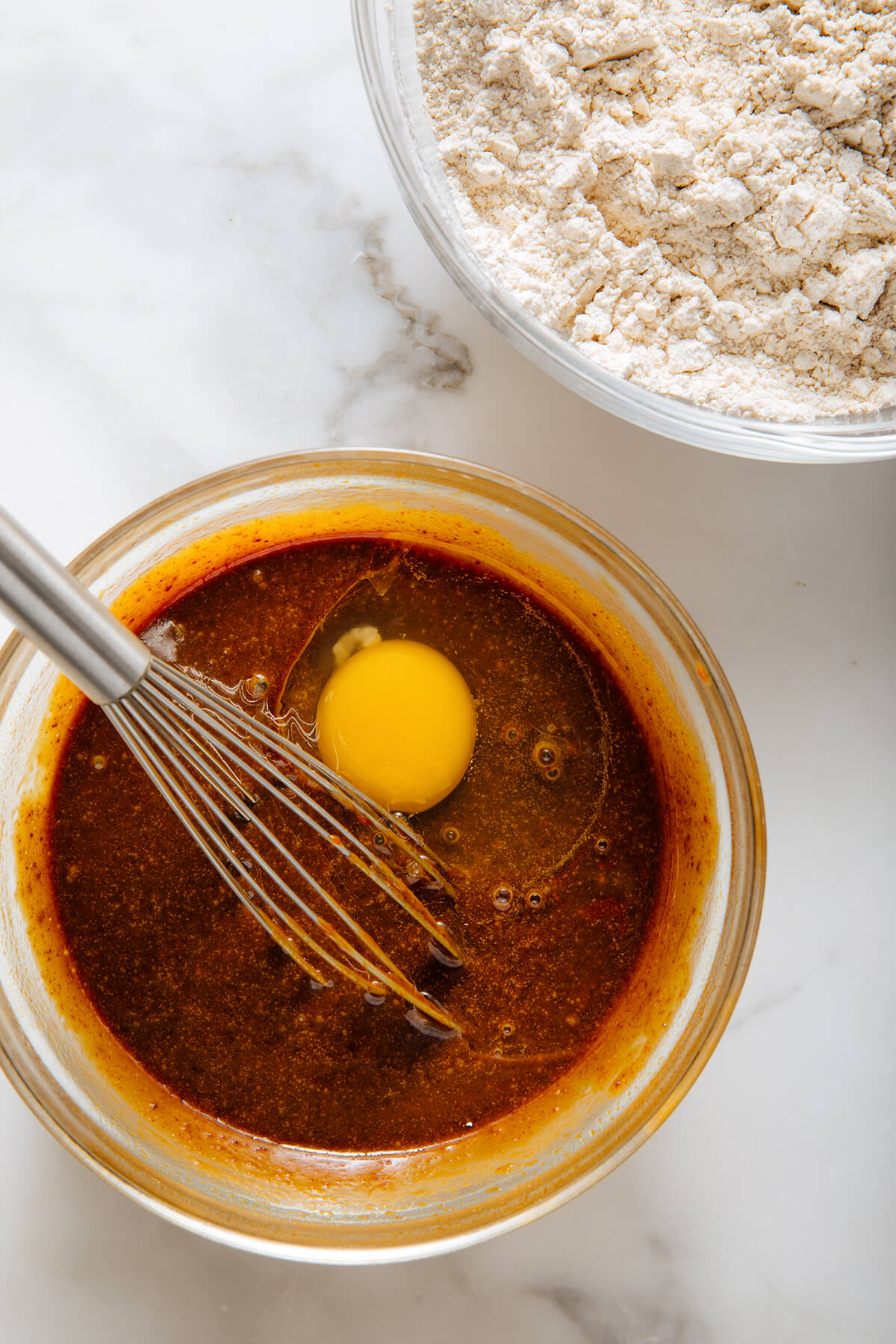
- In a small mixing bowl, combine the coconut oil and molasses and whisk until combined. Add the coconut sugar and whisk until blended. (If the sugar is gloppy and won’t incorporate into the mixture, warm the mixture for about 20 seconds in the microwave or over low heat on the stove, just until you can whisk it all together.) Add the egg and whisk until the mixture is thoroughly blended.
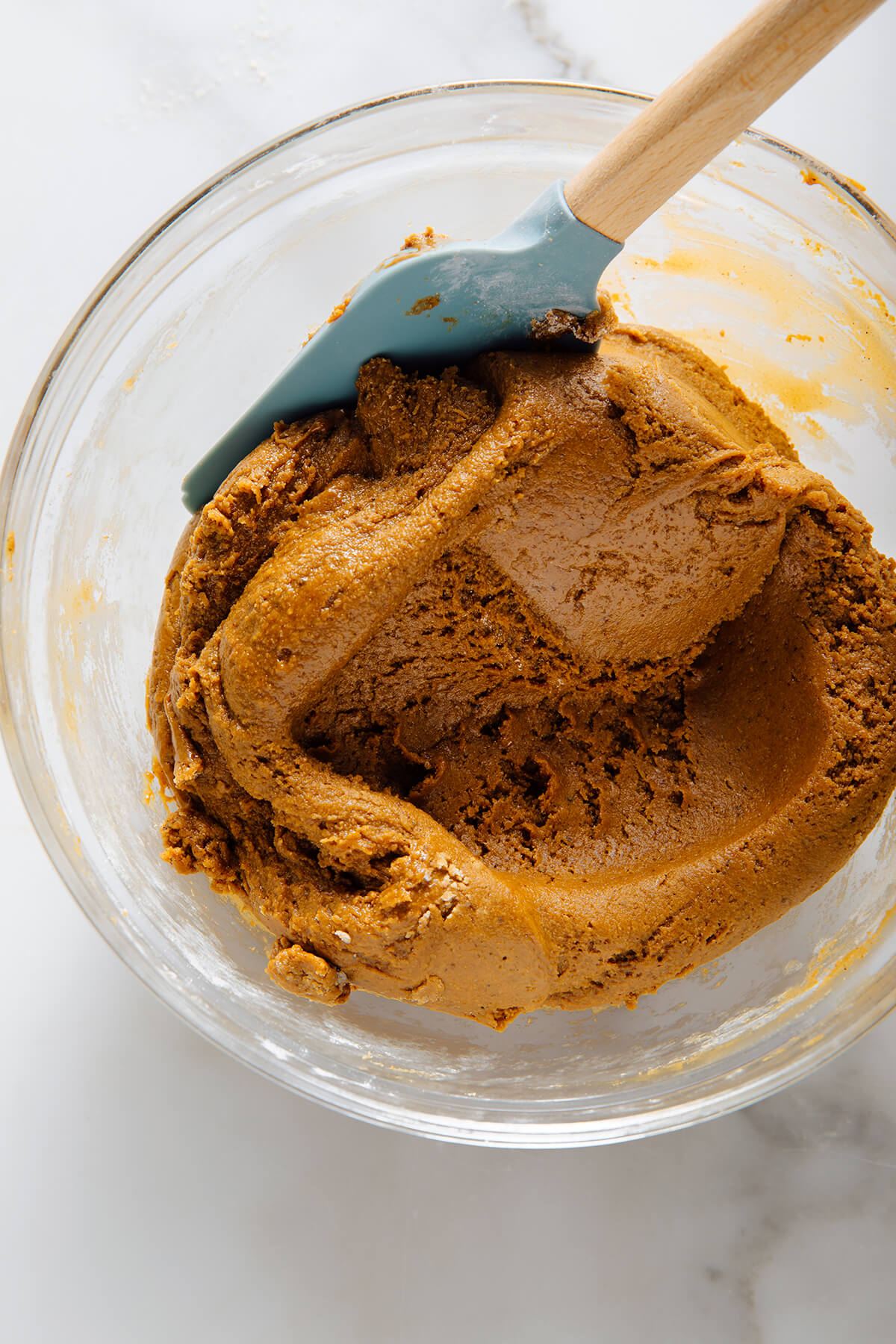
- Pour the liquid mixture into the dry and mix just until combined. (If it seems like you don’t have enough liquid, just keep mixing!) Divide the dough in half. Shape each half into a round disc about 1 inch thick.
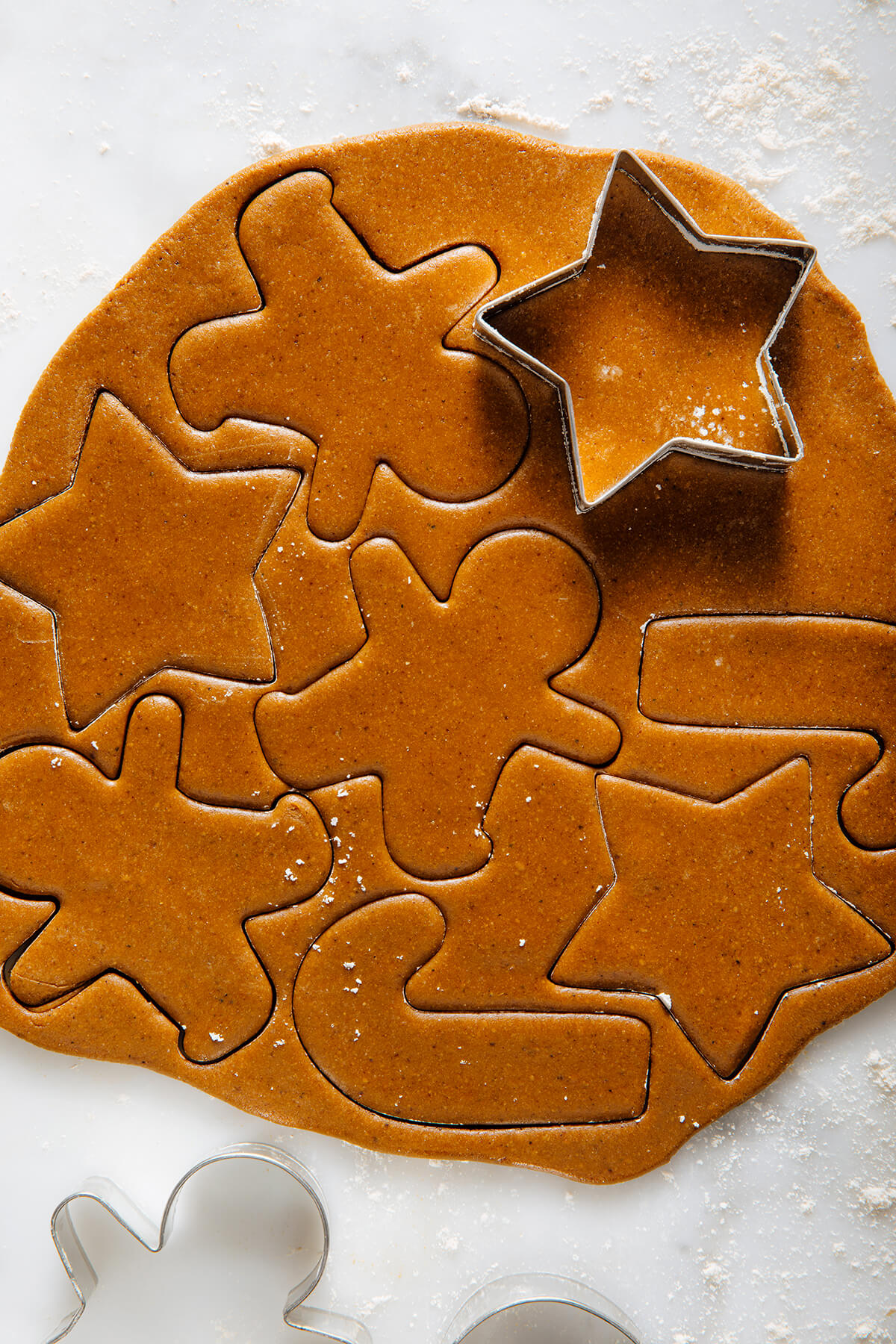
- Lightly flour your working surface and roll out one of your discs until it’s ¼ inch thick. Use cookie cutters to cut out cookie shapes and place each cookie on a parchment-lined baking sheet, leaving about ½ inch of space around each one (this dough just barely expands during baking).
- Combine your dough scraps into a ball and roll them out again, repeating until you have used up all of your dough. Repeat with the remaining disc. (If you’d like to decorate the cookies with granulated sugar like turbinado or extra coconut sugar, sprinkle it onto the cookies now.)
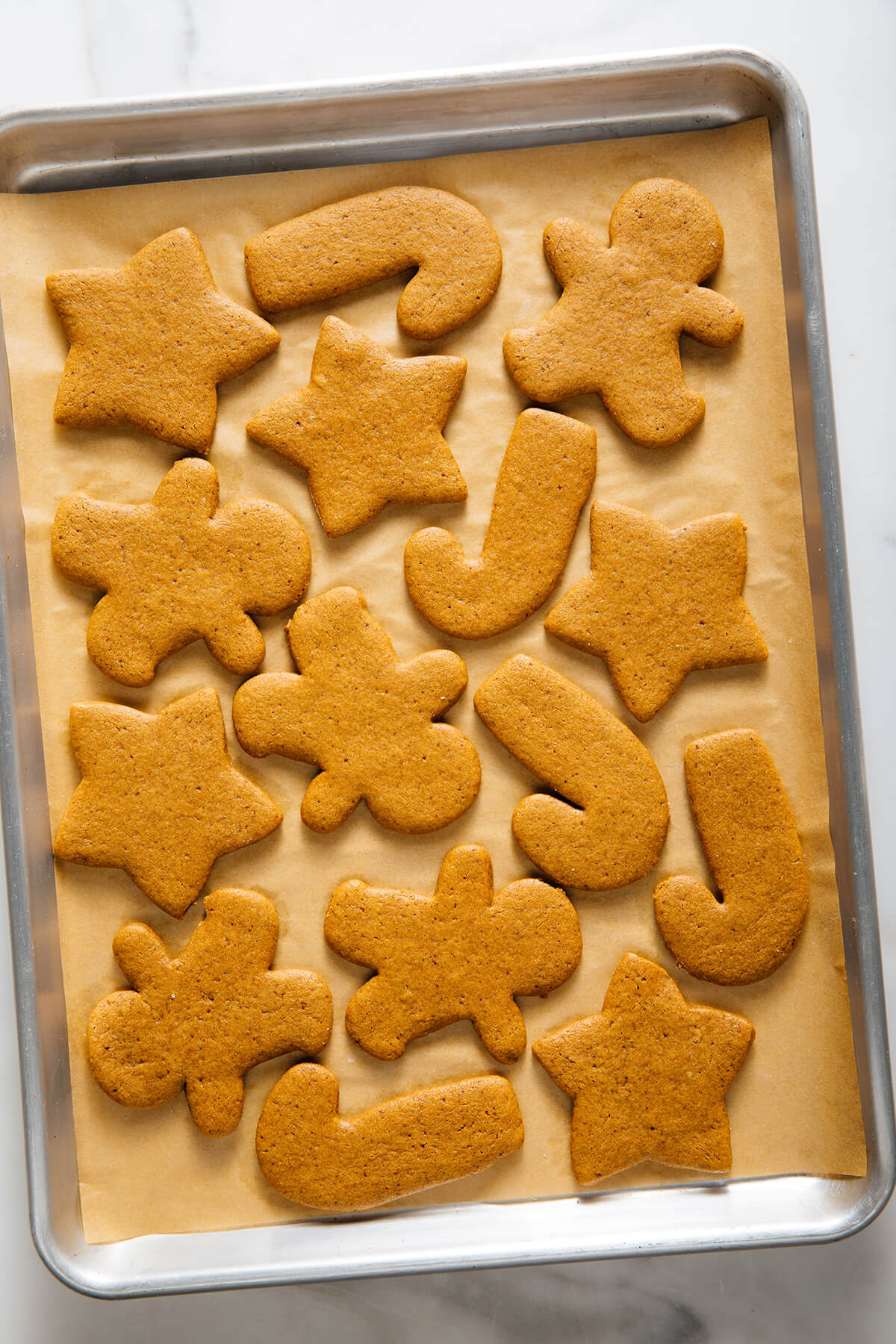
- Place baking sheets in the oven, one on the middle rack and one on the upper. Bake for 8 to 11 minutes; for softer cookies, pull them out around 8 minutes and for more crisp cookies, bake for up to 11 minutes. The cookies will further crisp as they cool. Place the baking sheets on cooling racks to cool.
- If you’d like to ice the cookies and/or sprinkle them with powdered sugar, wait until they have completely cooled to do so. To make the icing, in a small bowl, combine the powdered sugar, optional lemon zest and the lemon juice. Whisk until thoroughly blended. Transfer the icing into a small Ziploc bag, squeeze out any excess air and seal the bag. Cut off a tiny piece of one of the lower corners and squeeze icing through the hole to decorate the cookies as desired. The frosting will harden eventually, but it won’t ever be as indestructible as royal icing.
- If you’d like to sift powdered sugar over the cookies, do it now. Wait until the icing has firmed up (about 1 hour) before carefully stacking the cookies in a storage container. Cookies will keep for up to 1 week at room temperature.
Notes
Recipe adapted from Martha Stewart, on Smitten Kitchen’s recommendation. Recipe updated in December 2018 to remove whole wheat flour as an option—it doesn’t work well. My sincere apologies to anyone who was disappointed by their cookies.
*Flour notes: This recipe works great with whole wheat pastry flour. You can generally find whole wheat pastry flour at well-stocked grocery stores, as well as health food stores. All-purpose flour will also work. The dough tends to be hard and crumbly when made with regular whole wheat flour so I don’t recommend it.
Make it vegan/egg free: A couple of readers have reported that the cookies turn out well with a flax egg.
2025 recipe update: After retesting this recipe, I realized that the chilling step is unnecessary, so this recipe has become even easier! I removed the following from the recipe: Wrap the discs in plastic wrap. Place both discs in the refrigerator and chill until cold—about 1 hour, or up to overnight. If the dough is very hard or crumbly, just roll it as best you can and then let it rest for a few minutes to warm up. Repeat until you’ve successfully rolled the dough to ¼ inch thickness.
Nutrition
The information shown is an estimate provided by an online nutrition calculator. It should not be considered a substitute for a professional nutritionist’s advice. See our full nutrition disclosure here.










YAAAAASSSS! I love ginger and super spicy gingerbread, these are going on my “to make” list.
I feel you on the bah-humbug, my birthday is December 24th. When I was little, my parents would compensate by celebrating my half birthday on June 24th, which is also my big sis’s birthday!
We used to celebrate on my half birthday, too! Every year, I tell my friends that I want to throw myself a pizza pool party, but somehow it never happens. Funny that you and your sister are six months apart!
That last picture really makes me smile. ;)
Can’t wait to try these.
Beautiful pictures as always! They inspire me to make your recipe instead of my usual one. I feel for you having a Dec. 25th birthday, but another way of looking at it is you gave your mom the best Christmas gift ever, you!!! I bet that is how she felt when you were born! I was born the day before Mother’s Day in May, so based on each new calender year my b-day sometimes falls on Mother’s Day, so I feel your frustration of not being able to have your own day to celebrate the birth of you!
Well, I have heard my mom say that! Thank you, Jerylin!
Wow, these are ADORABLE! Love, love, love them!! On my Christmas Cookie list!
My giant (though as of yet unlit) Christmas tree, pine scented candle, Pandora holiday playlist and I are very, very ready for these cookies. Love that they are whole-wheat too! Also, I’m going to need to hear about your 30th birthday festivities. Selfishly, I need all the party planning help I can get, and I am sure that yours will be a beautiful and much deserved celebration!
Thank you, Erin! xo!
We have the same birthday! I just got unreasonably excited about this, probably because not many people KNOW what that means. I usually celebrate after Christmas, and I hope your birthday celebration is magical, and free from friends not being able to attend because of holidays/combined presents/always being called the Christmas baby/all the compromises that happen.
In cookie news, these are the gingerbreads that I’ve been looking for and am going to try out TODAY, because it’s snowing and beautiful and cold outside.
You know!!! So refreshing. I hope you have a marvelous birthday this year, Allyson, and that your cookies turned out well!
Could I substitute regular cane sugar for the coconut sugar? If so, should I use white or brown sugar?
Yep! Brown sugar would be best. Same amount.
Hi Kate
I live on the beautiful Gold Coast in Australia, so while you guys are in winter we enjoy summer for Christmas. It can be quite hot at Christmas so many recipes do not suit. However I love your recipes and comments, I have to search out some ingredients like the “pastry flour” we do not have that here, for all your Aussie fans I discovered that wholemeal plain flour is the same. I have printed many of your recipes and noe have a separate folder. I became a vegetarian some years ago and now find I am really enjoying cooking again, thank you for a great website.
May you have a very “Happy Festive Season”
Cheers Maeve
Thank you for your note, Maeve! I’m glad you appreciate my site, even if the seasons are backward. :)
These look amazing, can’t wait to make them with my kids. Like Maeve I live in Australia but we are in Melbourne (Maeve if you are interested it might be worth googling to find your local organic or health food store which may well have pastry flour i.e. cake/biscuit flour). Happy holidays!
I hope you all love the cookies, Rachel!
Wow these do look super healthy! What a wonderful alternative to gorging on refined sugar and flour over the holidays. So simple and festive too. Definitely your style :) Thanks for sharing!
Thank you, Jessie! :)
I raise you a bah-humbug with a January 2nd birthday ;) These look awesome!
Haha! I bet everyone’s tuckered by the time your birthday rolls around. I’m sorry!
These look delicious! I love gingerbread cookies!
Yay! I’m so happy to see a healthy gingerbread recipe! I really want my Christmas cookies this year and it’s create that coconut oil and sugar can save the day. Also who knew about molasses? My jar of it is just sitting in the back of my cabinet all neglected! Gotta get that out!
These are absolutely lovely, Kate! My birthday is New Year’s Eve (turning 31 this year), so I totally get it. I don’t mind though, this is such a great time of year for celebrations of all kind. Happy holidays, and thanks for such a great recipe!:)
Oh man, holiday birthdays are tough! At least everyone’s in the mood to get out and celebrate on yours! Happy early birthday, Heather.
I’m a 12/25 bday too! When I was young it was the worst. Now that I’m late 30s and a mom we decorate Black Friday and are first to turn on the outside lights! I admit I still get disappointed when I get a “for your December/Christmas birthday” card; thanks hallmark. The cookies look delicious and I’ll report back when I make them. Happy Birthday!
Hello, fellow Christmas baby! I’m glad you’ve embraced it now. I’ve never gotten one of those cards—I didn’t know they existed! Why??
These look fantastic, even if usually in my book ‘healthy’ and ‘Christmas’ are not words that are supposed to belong in the same sentence together!
Crispy healthier gingerbread cookies sound great and look just irresistible :)
Bring on the blackstrap molasses! I love a good gingerbread cookie and also love that you made a healthier version. I am putting together my holiday baking list today and am definitely adding these!
Hope they turn out great for you, Taylor! xo!
These look so great!
Siobhan
I am so excited to make these… yummers. I love love love that you take the classics and make them healthier. Even just the sugar substitute is so important. So much sugar around the holidays, I try to stick to honey/maple/coconut!
Thanks, Kari! I hope they turn out marvelously for you!
Oh man, that’s a tough one. December 25th birthday?! I hope the people around you get a good slap on the wrist if they try to combine your birthday with Christmas. BIG NO NO!
I want to try these guys, you have a knack for lightening things up, I have your healthier banana bread in the fridge now, and I can’t get enough!
Haha, yep, that’s how it goes! So glad you’re enjoying the banana bread. Hope you’re well! Just read that your baby will be hear in a week or so, yay!!!!
I can’t wait to try out these cookies!
Do you think I can use Sprouted Spelt flour instead of the Whole Wheat flour?
Hi Christina, I think so, but I’m not entirely sure. I know the moisture content in spelt is a little different from whole wheat flour.
The bear shaped gingerbreads are so sweet! This is definitely a recipe I’ll be utilizing and sharing!
Thanks, Gaby! I hope the cookies turn out great for you. I found the bear cookie cutter in Target’s holiday section this year.
I cannot wait to make these! I absolutely love gingerbread but have never got round to making my own. This year I’m going to make a big batch of these. I really love the spicey, warm flavours with a sweet, crunchy cookie.
Ooh I’m feeling all festive now!
Issie x
concealerandkale.blogspot.co.uk
I hope you love the cookies, Issie! Please let me know how they turn out.
These looks so delicious! I just received a yoga cookie cutter and now I have a recipe to go along with it – yay!
Thanks for sharing, have a great day!
A yoga cookie cutter? I want one!
Isn’t coconut sugar a little less sweet then regular (brown) sugar. If you replace it for regular sugar, should you put less sugar in the mixture?
Hi Den! That may be true. I just swapped coconut sugar for the brown sugar in a classic gingerbread cookie recipe, so I don’t think you need to worry about it.
Hi!!! Your cookies looks so good!
I’m from Chile, and I can’t find molasses here, can I replace it for maple syrup? Or something else?
Hi Scarlet! I think maple syrup would be the best substitute, but I’m not 100% sure how they’ll turn out. They won’t taste the same as mine, but maple cookie would be so good, too!
Here are a couple of links, both with great info, about subbing for molasses. Good luck!
http://frugalliving.about.com/od/makeyourowningredients/qt/Molasses_Sub.htm
http://www.myrecipes.com/how-to/cooking-questions/substitute-for-molasses
In Brazil, we visited a Cachaca distillery, a rum like alcoholic liquor made from cane sugar. Molasses was a by product of Cachaca, and we purchased some. It was most like blackstrap molasses, and very delicious. Would you let Scarlett in Chile know this? Maybe it is available in Chile under another name.
After looking for something look like molasses, I find something called “Chancaca”, but it’s a little dificult to use because it has a really hard structure. Its like a block of caramel, so I have to disolve it in water to achieve the consistancy.
Do you know if these freeze well? Want to get started baking for Xmas day family party. I so love your blog, make so many of your recipes, and love your dog!!!
Hi Chris! Cookie says hi. The cookies do freeze well. You might wait to frost them until the day you plan to serve them, since the cookies might get a little knocked around in the freezer.
Hi, Kate. Plan to make these for a holiday event this weekend…I have been avoiding coconut oil due to cholesterol…I know there is controversy over the benefits and downsides of coconut oil but I am just playing it safe. Can olive oil be substituted, do you think, or will they have a weird taste?
I have not tried this recipe yet – but I have subbed olive oil in place of coconut oil in cookies before without issue (and also avoiding a bit too strong of a coconut flavor). I’d suggest making a 1/2 recipe test batch to see how it goes.
Hi Hayley, that’s a good question, and I’m sorry I didn’t answer you in time for the weekend. The spices and molasses flavor (especially blackstrap) are pretty strong, so they might just cover up any hint of olive oil. I couldn’t taste any coconut in mine, so I’d say it’s entirely possible. Please let me know if you try.
These are so good! Made a batch today and my son and I devoured half of them in one morning- he kept saying “come on , just one more star..”I too live in Australia and couldn’t find pastry flour so just used my usual wholemeal spelt and they turned out just fine.I love it that they are not too sweet- just how I like my cookies- I used blackstrap molasses and we loved the taste but my daughter not so much so I will try your suggestion of using regular. It was a happy coincidence that I had put molasses down as something to try and feed my son( as he has decided to become vegan so I am looking for every vegan source of iron I can find )when your recipe arrived. I also made a big batch of your wonderful granola to go in my freezer today. Thank you so much for all your wonderful recipes -hope you have a fabulous christmas and birthday.
Rachel
Rachel, I’m so glad you and your son loved these cookies! Happy holidays to you and your family!
The timing on this is perfect. I was almost resolved to making my mother in laws traditional corn syrup filled gingerbread cookies. I really didn’t want to since I am trying so hard to make healthy foods for my family, but couldn’t see Christmas with out gingerbread. I found your site today after a mention on the Ambitious Kitchen blog. Getting ready to try this now. Cheers!
Thank you, Viki! I hope they turned out great for you, and I’m glad you found my blog! Thanks for saying hello!
Absolutely loving this variation on the gingerbread cookie. I’m a big fan of texture when it comes to baked goods and I always find that whole wheat flour gives it a little extra umph. Hope you’re having a great holiday season!
Thank you, Brian! Happy holidays!
Thanks for the recipe – look forward to trying this healthier version.
I get the late December birthday thing… my sister’s birthday is on the 27th which is probably why birthdays are such a big deal to her (mine is in the Spring and I really don’t care much about celebrating). So even though I’m not big on birthdays, I know my sister is, and every year a couple of weeks before her birthday when everybody is all about Christmas, I always make it a special point to bring up her birthday and ask her if she wants to do anything special (or even non-special) each year. I’m the only one in my large family who does that, despite my encouraging others to do so, and I hope she appreciates it. As for the “dreaded combo gifts”, any time I do that it is not because of proximity to Christmas… I do the same whether a family member’s birthday is in June or December… and I only do it if I want to give something I could never afford to be a single-holiday gift.
Thank you for sharing those resources, Pre! I have no doubt that your sister really appreciates you asking. I went eight years without a proper birthday celebration and it really started to get to me after a while! Now I just have to be really proactive about planning early, and like I said, I have some great help this year. They are so appreciated. :)
P.s. I think your double gifts are totally fair when you’re combining birthday/holiday funds like that.
Tried this recipe this past weekend and they were a hit! I used the dough for cookie decorating with my friend’s three-year-old daughter who also loved them! The cookies had a great gingerbread taste that wasn’t too much (I used the regular molasses) and the texture of the cookie was perfect for decorating…and eating after. I had to sub in brown sugar (that was all I had) but used coconut oil and whole wheat flour. I added a little more oil since the original dough was a touch dry, and it turned out great. Thank you for this! Ps – I also suffer from a late December birthday…I mandate the two holidays be as separate as possible!
Maura, thanks for letting me know! I’m so glad these turned out great for you. Happy early birthday! :)
Hooray! I adore gingerbread cookies, but my attempts at a healthier version have never come out quite right yet. Can’t wait to try these!
These were really yummy! We just used whole wheat flour and brown sugar as we didn’t have coconut sugar. They were a little challenging to roll out as they kept cracking, but we kept at it and they cut into shapes just fine. I think they taste every bit as good as white flour cookies and maybe even better!
Thank you, Kim! I’m glad they turned out well for you! I bet the dough cracked because the coconut oil needed a little more time to warm up (it can be brittle when cold).
I made these today.I expected these cookies to turn out great,based on other recipes that I’ve made from your blog and all were great..but they turned out to be better than great! thay are the BEST cookies I’ve ever eaten! so so delicious and full of warm flavours.definitly will make them again soon..maybe tomorrow?! cause they are all gone!
I used regular whole wheat flour,cause neither whole wheat pastry flour or white whole wheat flour can be found where I live(just out of curiosity.. what is the difference between those two?)and also used brown sugar cause I can’t find coconut sugar here :(
I live in a muslim country,and we do not celeberate christmas here.but I see all these food blogs that are making christmas cookies and I can’t just watch!so I’ve been making a lot of cookies lately(trying the healthier ones) and this was the best.thank you very much for your amazing recipes.
Zahra, I got a little nervous as I started reading your comment, but I’m so glad these turned out great for you! Hooray!!! Thank you for letting me know. I’m glad to hear your cookies turned out with regular whole wheat flour, especially since another reader just asked and I haven’t gotten a chance to try myself yet. Let’s see, whole wheat flour is made from red wheat berries, which have a more nutty flavor and darker color. I love whole wheat flour’s flavor, but sometimes I don’t want it to interfere with the other flavors, so I’ll use white whole wheat flour. White whole wheat flour works just the same as regular, but it’s made from white wheat berries that are lighter in color and flavor. Whole wheat pastry flour is made from soft white wheat berries. It’s very finely ground and has a lower protein content than the other two, so it doesn’t lend as much structure to the finished result. Sometimes it works great, but I’ve had trouble with muffins not rising as high when I use the pastry flour, and it definitely doesn’t work in recipes that call for yeast (pizza dough was a disaster). Hope that helps!
Thanks for your explanation.I just knew that they are lighter than regular whole wheat flour,but didn’t know how exactly.I hope soon they will be available here too.
I’ve made these twice now for 2 different parties and everyone loved them! All of the cookies were eaten both times. I really like that they are a little healthier than regular cookies. I love your site – thanks for the great recipes.
Thank you very much, Maisie!
I just realized I have whole wheat flour, not the pastry flour. Is that gonna work? Sounds like they will just be higher gluten and maybe more dense? Thx!
I’ve heard whole wheat flour works well for these!
Could you substitute gluten free flour?
Yes, I think an all-purpose GF blend should work here.
Help! Our dough is super tough like a rock. Any suggestions? Let it sit overnight in fridge
I’m sorry, Tracy, I just found your comment. Did the cookies work out for you? The dough just needs time to warm up until it becomes more malleable again.
I’m allergic to coconut; is there something I can use instead of coconut oil ?
Hi Samantha, butter would work, if you aren’t avoiding dairy.
Success! My first time making gingerbread cookies. My kids gave 2 thumbs up! They normally don’t care for gingerbread cookies and neither do I, because the commercially made ones taste horrible. I love baking with coconut oil and so glad I found your recipe, thank you! Our cookies turned out perfect with a few small tweaks, using ingredients we had on hand: 2,3/4 cups whole wheat flour and brown sugar in place of coconut sugar. I also changed up the spices a bit (1 tsp ginger, ommitted black pepper, added 1/2 tsp all spice) for the kids’ palates. Some readers have experienced rock hard cookies and it may help if they use less flour and/or decrease the baking time. We baked ours for 8 min and they were crispy on the outside and slightly soft on the inside, just the way we like them.
Thank you, Serene! I’m so glad these turned out well for you.
I love that this is yet another recipe that I can make with my son.
We just finished measuring and mixing everything together and are patiently waiting for the dough to be ready.
Thanks! I’m sure these will be a hit!
Great recipe kate! I really want to cook those cookies but molasses and coconut sugar aren’t common in my country (argentina) so i cant make them. Any replacements? Maybe honey for the molasses and regular or mascabado sugar for the coconut one?
Thank you so much! Keep making those amazing recipes of yours.
Malena.
Hi Malena! I think your ideas will probably work. The cookies won’t taste the same without molasses, but I think honey will taste really nice!
Kate! This Recipe was amazing. I replaced the egg with apple sauce like you suggested to make them vegan! My 2 and 5 year old girls had a blast decorating with icing and rainbow sprinkles of course! Thanks! Merry Christmas! Santa will love these. Valerie
Thank you, Valerie! I’m so glad the applesauce worked for you!
These were so good and easy to make. Also, we used a flax egg and they turned out great. Thanks!
These are awesome cookies!! I’m no baker, either. My creations usually burn, are undercooked, stick to the pan, etc…
These turned out tasty and perfect!
I was looking for a healthy cookie recipe for my husband who has to watch his cholesterol. Now he can treat himself on Christmas without the guilt!
Thanks!!
Thank you, Marie! So glad to hear it!
These turned out well for me too, thank you for a great recipe. I found I needed to add a little oil as they stayed in the fridge for 2 days before I worked with the dough.
Thank you! So glad you enjoyed the cookies.
HI Kate,
Thank you for sharing recipe. The picture on your blog looks amazing, but unfortunately mine turned terrible bad. My dough was too sticky and wet. I don’t have cup measurement so I convert Cup to Millilitre. I pour about 120 ml Molasses and 120 ml Melted Coconut Oil (which I found on other blog about conversion).
Please advice.
Thanks.
Hi Tia, I’m so sorry your cookies didn’t turn out well. Your conversions for the molasses and coconut oil are correct. It sounds like you needed more flour.
Hi Kate! We made gingerbread cookies for the first time this year and they turned out delicious! Thank you for your easy to follow and healthy option :-) Have a great New Year!
Thank you, Marbella! I’m so glad the cookies turned out well for you. Happy New Year!